Rune Bering
FOOL

Advertisement


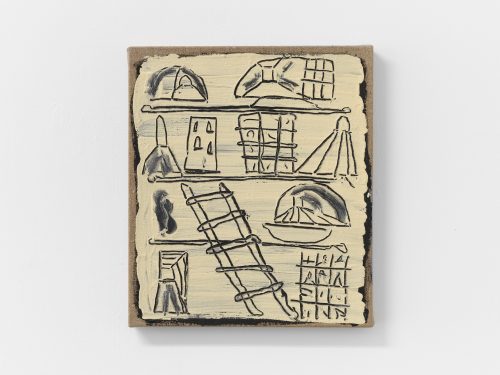
Theater as Machine (2026) Architectual drawings: Theatrum Machinarum, digital cameras, tracing paper, acetone transfer, acrylic frames 169,4 x 180 x 4 cm

Cabbage Head (2026) Bronze, copper, wood, wax

Cabbage Head (2026) Bronze, copper, wood, wax

Vax

FOOL (2026) Printed circuit board, playing card

Marotte (2026) Bronze


In the mid-17th century, the German architect and engineer Joseph Furttenbach published the book Theatrum Machinarum (Theatre as Machine). In this treatise on Baroque stage design, he describes how the spectator’s gaze and experience of reality can be directed through illusionistic techniques: moving architectural elements, special effects, and constructed perspectives. Within this mechanically orchestrated space, where the ruling order was staged, the fool appeared as a unique figure: an instrumentalized but unpredictable element—free, yet embedded within the machine.
Today, the mechanics of power are similarly staged. Tech companies now function as the new lords, who own platforms, clouds, and networks. Within these digital infrastructures, the stage of power has taken on new forms, but they build on principles that reference Baroque theatre. On this stage, narratives take shape through the interplay of architecture, technology, and the body—and the fool still plays an important role in sustaining the structures of power.